
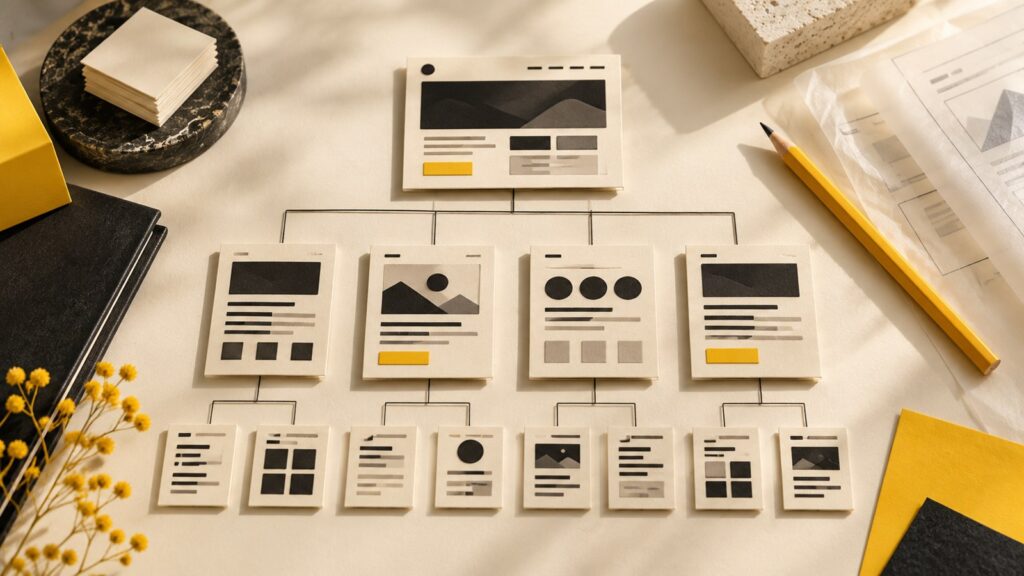
Before choosing colours, images or a template, define what the website should do for your business. Clear planning connects the audience, offer and content and gives every page a purpose.
You do not need to start with a complicated document. Begin with short answers to these questions, then use them to plan the structure, messages and contact options.

More questions, ideas and tools to put into practice in your website and marketing.

A campaign starts long before the ad. A clear message requires understanding who you address, what you offer and which decision you want to help people make. Even good design cannot easily compensate for an unclear offer.
Start with customer conversations and the questions asked before purchasing. Translate your business knowledge into language the audience understands, then maintain that direction in the ad, website and conversation.

When many tasks repeat, it is tempting to connect everything at once. Start with one process that has a clear beginning, desired outcome and responsible person. This helps you see whether the automation actually helps.
Before choosing a tool, map the work as it happens today. Identify consistent stages, where judgement is needed and what should happen if there is an error or missing information.

Website content should help people understand the business, whether the offer suits them and how to proceed. Start with audience questions and the role of each page.
Every area does not need a long text. Sometimes a precise headline, a short explanation and a clear next step do the job. Details should appear where they contribute to a decision.

Leaving contact details on a website is the beginning of a relationship. To turn an enquiry into a useful conversation, you need to know who handles it, what information is needed and what comes next. A clear process helps both the customer and the business.
Review the journey from form submission to resolution. Not every stage needs a new system: sometimes centralised information, clear ownership and a reliable reminder are enough to get started.

A content plan helps you choose what to talk about, in what order and for what purpose. It does not have to be a packed publishing calendar. Start with a few questions your audience asks and a pace you can maintain.
When content connects to your offer and the way customers make decisions, it is easier to choose topics and understand each post’s role. Your plan should also leave room for new questions from real conversations.

Before launch, explore your website as someone visiting for the first time. Is the offer clear? Is it comfortable to read? How do you get in touch? Check the whole journey, rather than just the homepage.
A short checklist helps separate essentials for launch from improvements you can plan later. Make sure the content is accurate and contact options work as expected.